

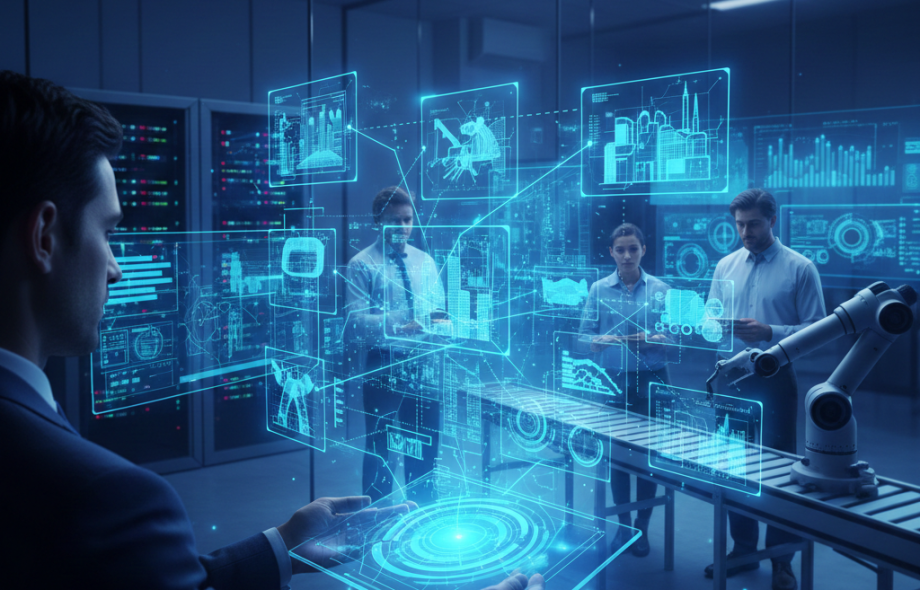
Digital twins have taken the technology industry by storm, offering a whole new way of revolutionizing the digital world. This innovative concept involves creating a virtual duplicate, or twin, of a physical object, system, or process. This powerful tool allows for real-time monitoring, analysis, and optimization, ultimately leading to enhanced efficiency and productivity.
One of the key advantages of digital twins is their ability to provide a comprehensive and detailed representation of their physical counterparts. By collecting and analyzing data from sensors and other sources, digital twins can offer valuable insights into the performance and behavior of the original asset. This data-driven approach allows for predictive maintenance, optimization of operations, and even the development of new business models.
Moreover, digital twins enable stakeholders to visualize and interact with complex systems in a virtual environment. This not only enhances decision-making processes but also facilitates collaboration among different teams and departments. For example, in the manufacturing industry, digital twins can be used to simulate production processes, identify bottlenecks, and optimize workflows in real-time.
Furthermore, digital twins have the potential to transform various industries, including healthcare, transportation, and smart cities. In healthcare, for instance, digital twins can be applied to monitor patients’ vital signs, predict health risks, and personalize treatments. In transportation, digital twins can help optimize traffic flow, reduce congestion, and improve safety. And in smart cities, digital twins can enable urban planners to design sustainable infrastructure, manage resources efficiently, and enhance quality of life for residents.
As the demand for real-time insights and predictive analytics continues to grow, digital twins are poised to play an increasingly significant role in shaping the future of technology. By leveraging advances in IoT, artificial intelligence, and cloud computing, organizations can harness the power of digital twins to drive innovation, improve decision-making, and achieve competitive advantage in their respective industries.
In conclusion, digital twins represent a game-changing technology that has the potential to redefine how we interact with and optimize the physical world. By creating virtual replicas of assets, systems, and processes, organizations can gain a deeper understanding of their operations, improve efficiency, and unlock new opportunities for growth. As digital twins continue to gain traction across various sectors, it is essential for businesses to embrace this technology and explore its transformative potential.
 :
https://www.pinterest.com/xceltec0192/
:
https://www.pinterest.com/xceltec0192/